Fall Driving Visibility: The Light and Wiper Check New Albany, OH Drivers Should Do Now
Sometime in the next few weeks, your evening commute is going to end in the dark. If you're driving into New Albany for work and back out again, that shift happens fast, and most of us don't adjust anything about the car to match it.
Fall driving visibility is one of the few safety areas you can improve in about ten minutes in your own driveway. Here's what's actually worth checking.
Why fall is harder on visibility than winter
Winter gets all the attention, but fall stacks up several problems at once:
- The sun sits low right at commute hours. Morning and evening glare comes straight through the windshield at the worst possible angle, and it shows every streak and haze mark on the glass.
- Wet leaves and first rains. A road surface that's been dry all summer collects oil, and the first good rain lifts it. Wet leaves on top of that are genuinely slick.
- Fog on cool mornings, especially in low spots and along creek bottoms.
- You're suddenly driving in the dark on roads you've only been seeing in daylight since spring.
- Deer are more active through the fall, and they show up at dusk and dawn — exactly when your lights matter most.
A burned-out bulb you'd never notice in July becomes a real problem in October. So does a wiper blade that was "good enough" through a dry August.
The ten-minute light check you can do in your driveway
You need a helper, or a garage door, storefront, or window you can back up to and watch the reflection. Go through every light on the vehicle, not just the obvious ones.
| Light | How to check it | What to notice |
|---|---|---|
| Low beams | Turn them on, walk to the front | Both lit, similar brightness, similar color |
| High beams | Switch on, confirm the dash indicator lights too | Both sides fire, and they actually switch back down |
| Taillights | Headlights on, check the back | Both lit — this is the most commonly missed one |
| Brake lights | Helper presses the pedal, or back up to a reflective surface | All three, including the center high-mount light |
| Turn signals | Left, then right, front and rear | A fast-blinking signal usually means a bulb is out somewhere on that side |
| Reverse lights | Shift to reverse with your foot firmly on the brake | Both lit and bright |
| Plate and marker lights | Headlights on, look low at the rear | Easy to ignore, easy to get pulled over for |
| Hazards | Press the button, walk around the vehicle | All four corners flashing together |
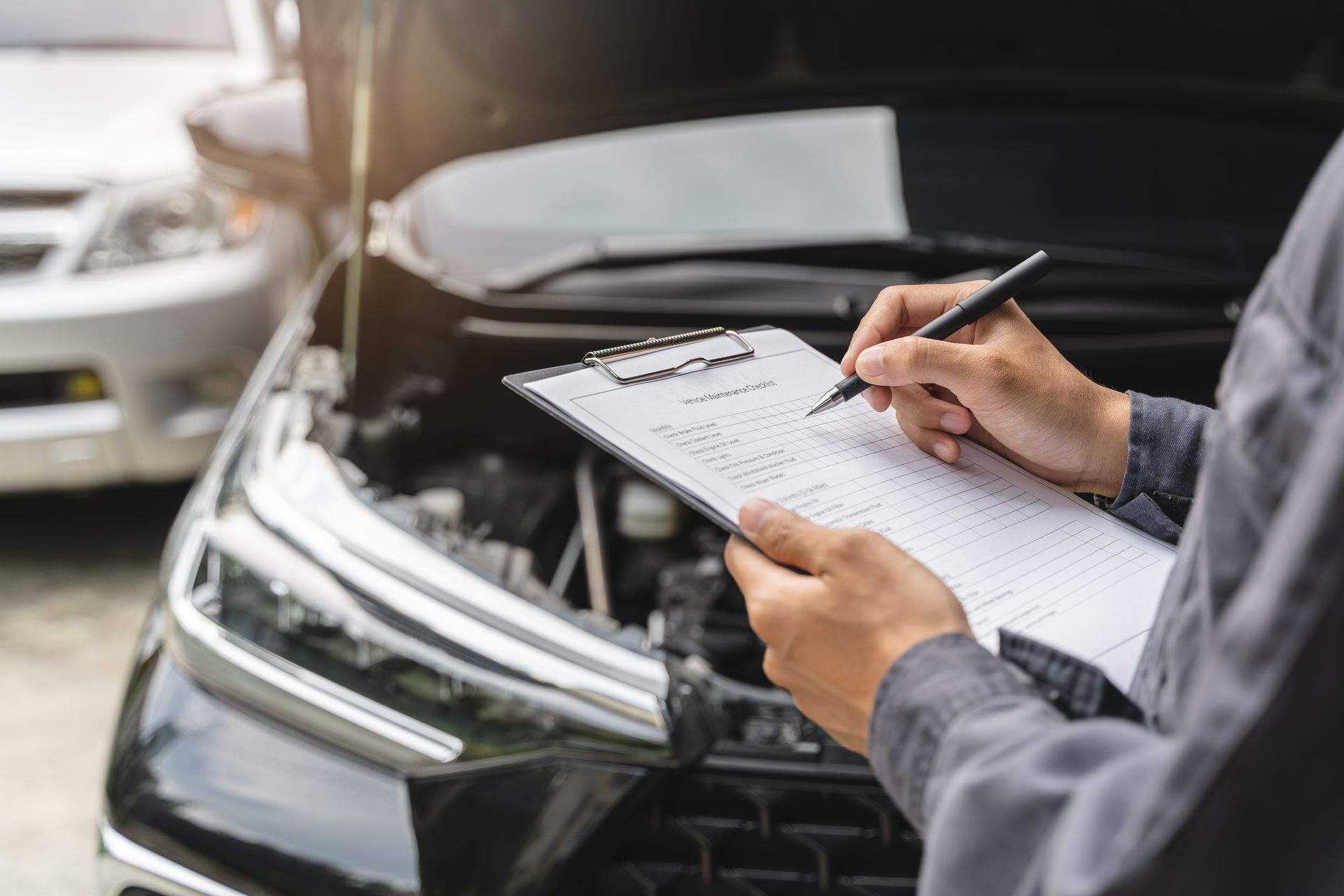
Write down anything that didn't light. Bring the list with you. It saves us time and saves you money.
If your headlights look dim or yellow
This is the one where the internet will confidently tell you the answer, and the internet is often wrong. Dim or discolored headlights can come from several different places:
- Bulbs that have aged and lost output, which happens gradually enough that you don't notice
- Plastic lens covers that have oxidized and hazed over from years of sun
- A wiring or ground connection problem on one side
- A charging system that isn't delivering steady voltage
- Headlight aim that's drifted, so the light is going somewhere other than down the road
Those have very different fixes, and we're not going to guess at yours from here. What we can tell you is what pattern points toward something electrical rather than cosmetic: if one side went dim suddenly, or both dim and brighten as engine speed changes, that's worth having checked rather than polished.
Wipers, washer fluid, and the things you can handle yourself
These are genuinely simple, and there's no reason to pay someone for them if you'd rather not.
- Look at the rubber edge of each blade. Cracked, split, curled, or hardened rubber won't clear water no matter how new the arm looks.
- Notice how they behave in rain. Streaking, chattering, or leaving a band of water in your line of sight means they're done. Blades wear out on a schedule closer to a season than a year in Ohio.
- Replace them yourself. Most blades clip on and off in a couple of minutes, and the parts store can look up the right size for your vehicle.
- Don't run dry blades on a dry windshield. It's the fastest way to ruin a new set and scratch glass.
- Top off the washer fluid and switch to a winter-rated fluid before freezing weather. Plain water in the reservoir will freeze and can crack it.
- Clean the inside of the glass. The film that builds up on the inside is what turns low sun into a wall of glare.
While you're at it, check your tire tread and condition. Seeing the road is half of it; being able to stop on a wet one is the other half.
When to bring it in
Come see us if a bulb is out and you'd rather not fight the housing, if a signal is blinking fast, if something worked yesterday and doesn't today, or if anything flickers. Flickering usually means a connection, and connections get worse with cold and moisture, not better.
During a battery and electrical service visit, our ASE-certified technicians will:
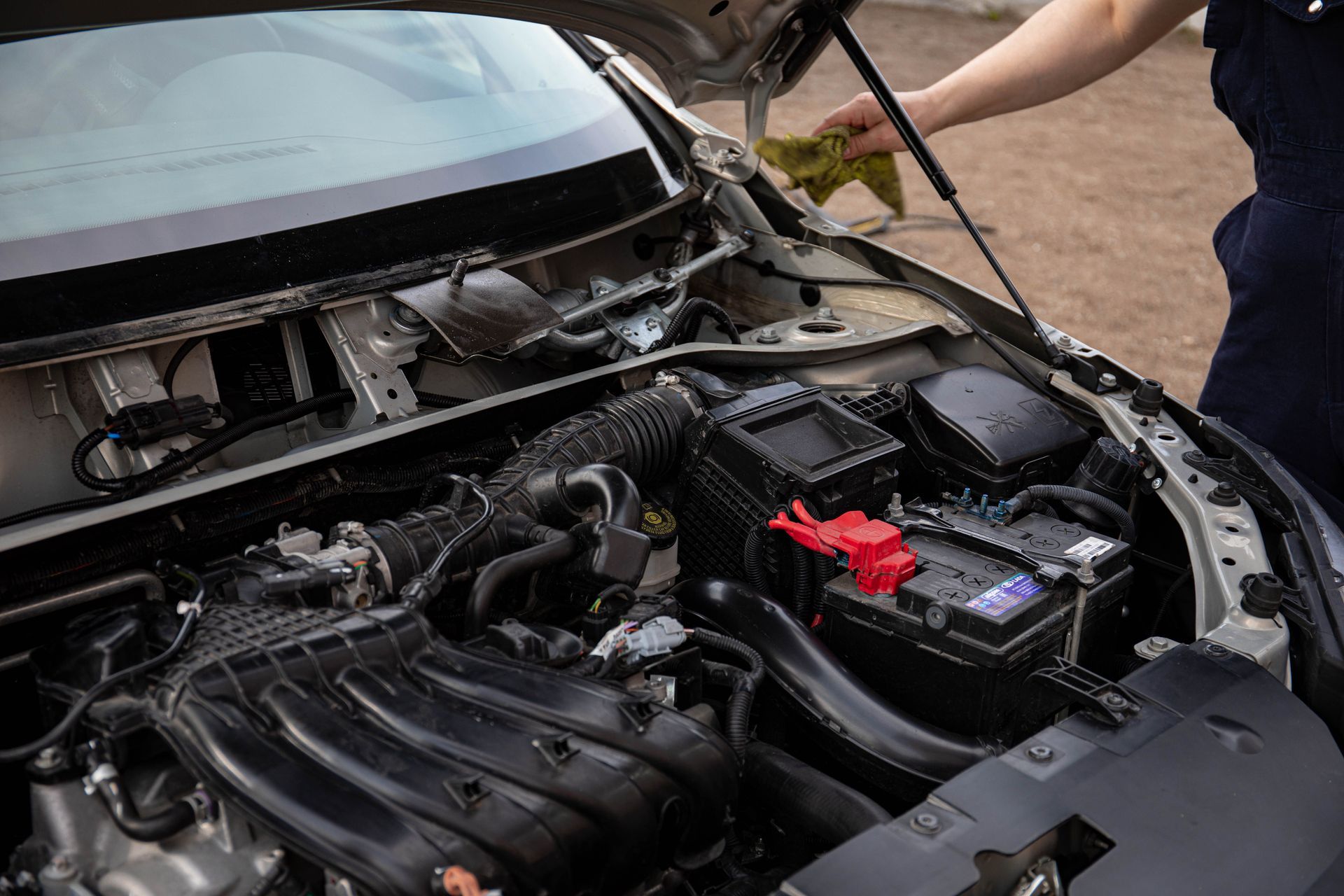
- Check every exterior light and confirm the correct bulb type for your vehicle
- Inspect sockets, connectors, and grounds for corrosion — a common cause of a light that works intermittently
- Check charging system output, since steady voltage is what keeps lighting bright
- Look at headlight aim and lens condition and tell you honestly whether it's worth addressing
- Check wiper blades, arms, and washer function while we're there
If it's a bulb, it's a bulb, and we'll tell you that. Any repair we perform is backed by our 24-month/24,000-mile NAPA warranty.
Handle it before the clocks change
Once the evenings go dark, you'll be driving on whatever lights you have. Better to find the dead taillight in your driveway on a Saturday than from a police officer's window on a rainy Tuesday.
Call (740) 788-9222 or book online, and ask us to include a lighting check with your next preventative maintenance visit. If your vehicle needs more than that, we handle the full range of auto service and repair in one place. For more on what this climate does to your vehicle year-round, see how Ohio weather affects your vehicle.